
October might be the best month of the year in North County. The water is still warm, the evenings are just starting to cool off, and the tourists have mostly gone away (unfortunately, the surf is still crowded).
The markets this summer have been a bit like the surf: crowded with noise but delivering if you stay out there.
Sell in May? Not This Year
Every spring, an old Wall Street saying makes the rounds: “Sell in May and go away.” The idea is that stocks tend to struggle over the summer, so you might as well step aside until fall.
This year, anyone who followed that advice paid for it. Since May 1st, the S&P 500 is up about 7%, and the tech-heavy Nasdaq 100 is up more than 10% as of this writing. That happened during a stretch that included an ongoing conflict in the Middle East, oil above $100 a barrel, a weak July jobs report, and the Federal Reserve’s first rate hike in three years.
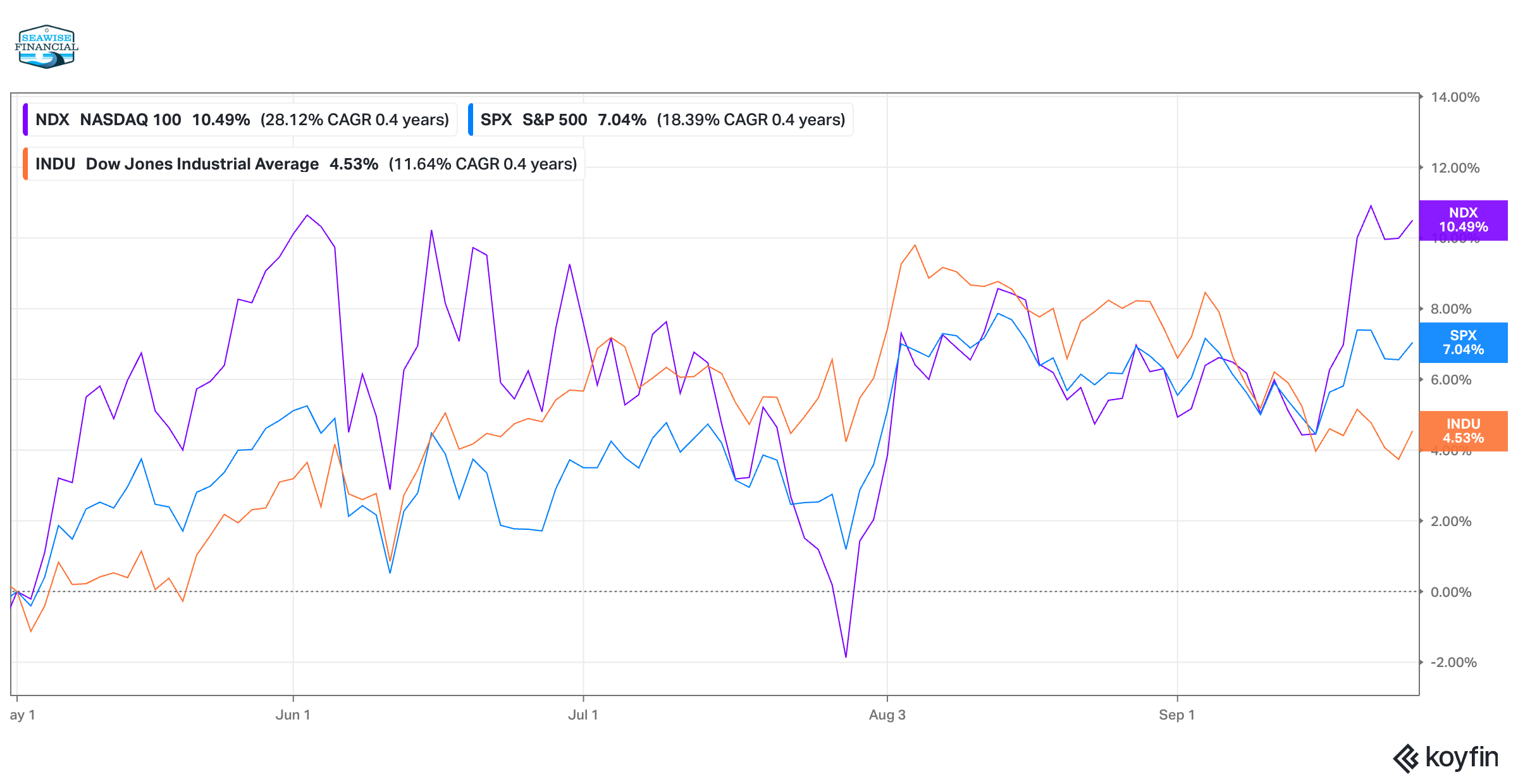 |
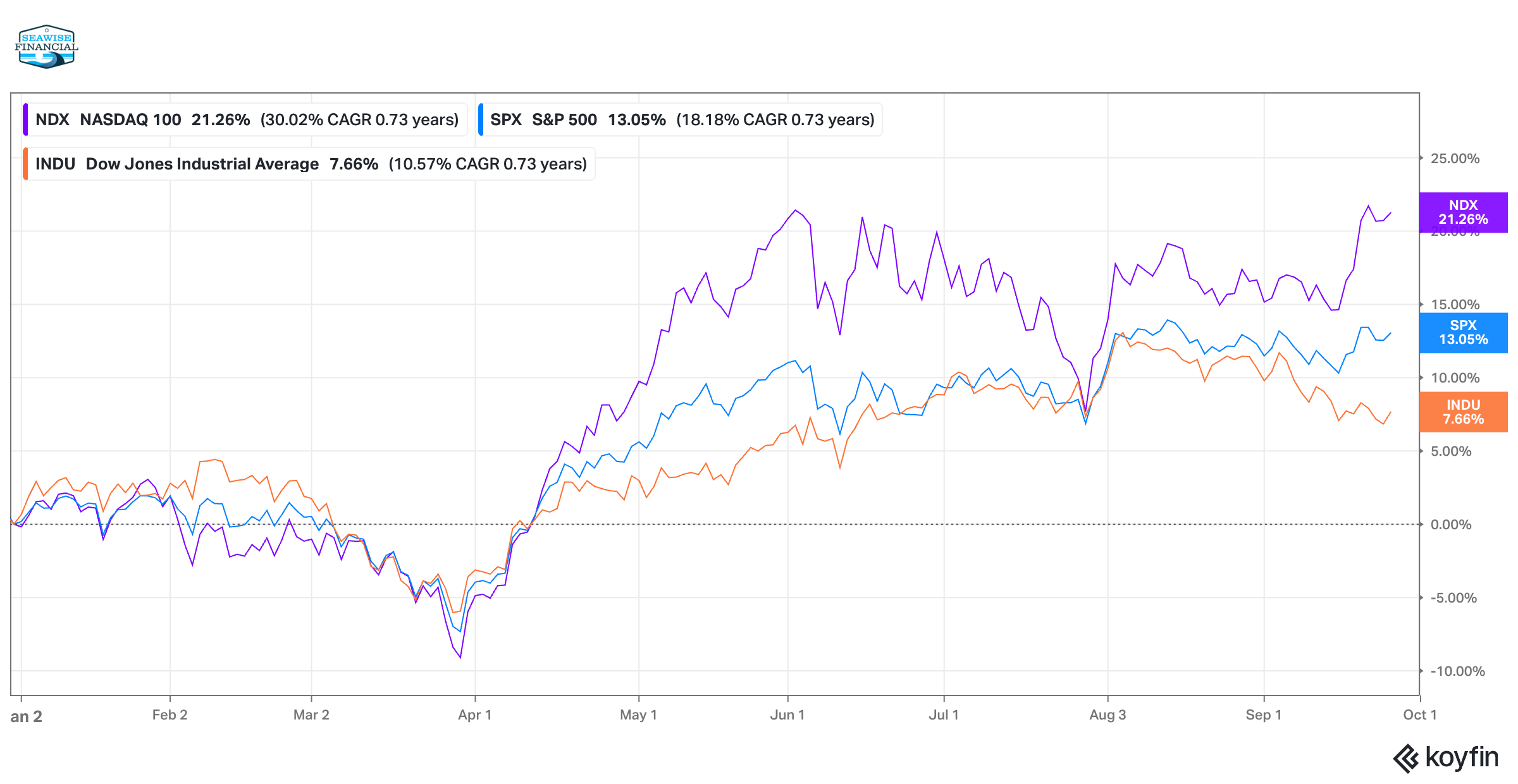
After a shaky start to the year, we’re now looking at pretty decent returns in the stock market as we enter the last few months of the year.
 |
Is 2026 Just an Average Year?
If you only read the headlines, 2026 feels anything but normal. But when you step back and look at the numbers, a surprisingly ordinary picture emerges.
Stocks. The S&P 500 is up about 13% year to date, a bit ahead of its long-term average of roughly 10% per year. The one real scare came in March, when stocks dipped about 7% below where they started the year. The average year includes an intra-year decline of about 14%, so even that was milder than normal.
Inflation. Headline inflation is running at 3.4%, right around its long-term average of just over 3%. Core inflation, which strips out volatile food and energy, is 2.4%, its lowest level since early 2021. Much of the headline number is coming from the gas pump.
Interest rates. The 10-year Treasury yield is just over 5.20%. That may sound high after the last 15 years, but it’s still below its average since 1962 of 5.8%.
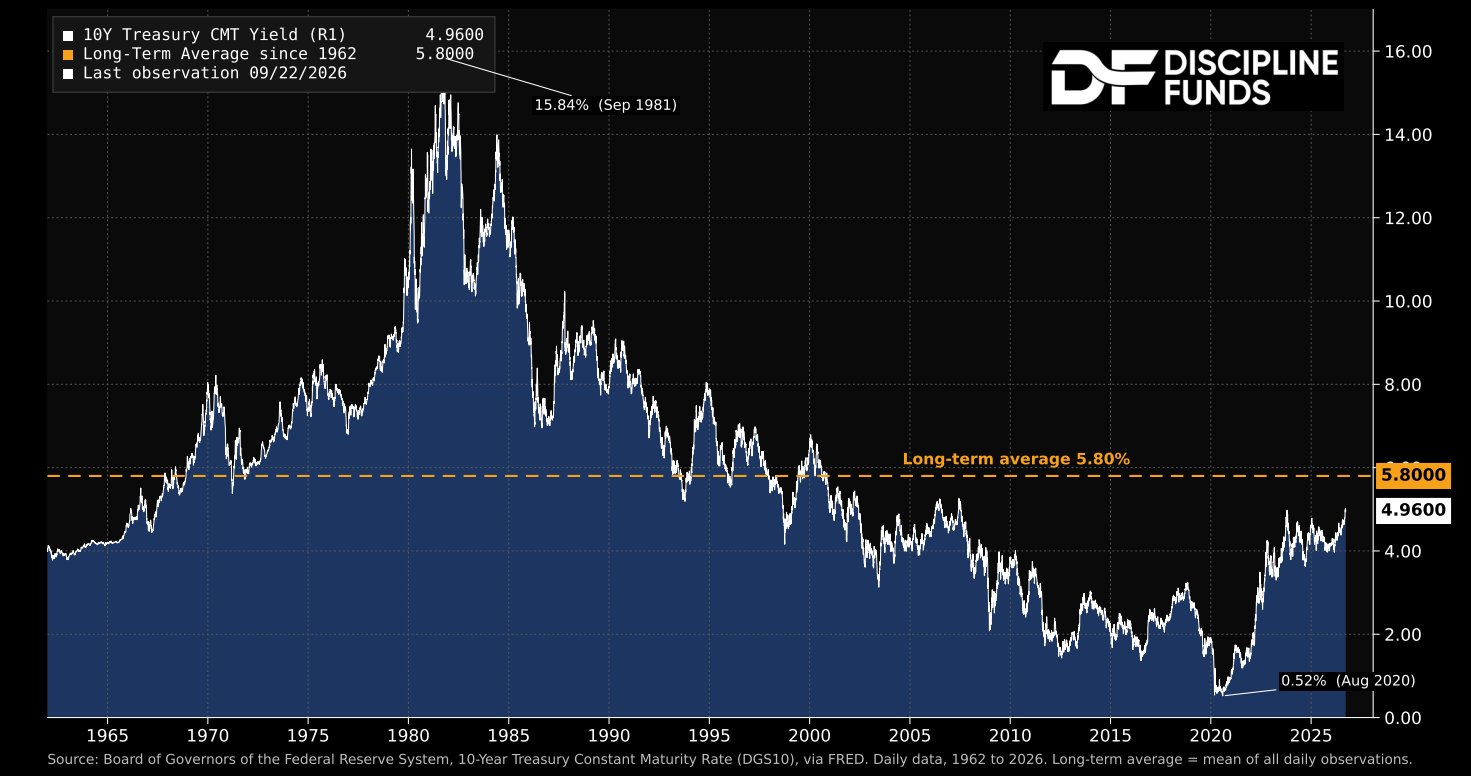 |
Source: https://x.com/cullenroche
Growth. This is the one area running below average. The economy grew at a 1.5% annual pace in the second quarter, slower than the long-term norm. Slow, but still growing.
Put it all together and you get a year that has felt dramatic but, by most measures, looks pretty average as we head into the last quarter of the year.
Higher Rates May Be Here to Stay
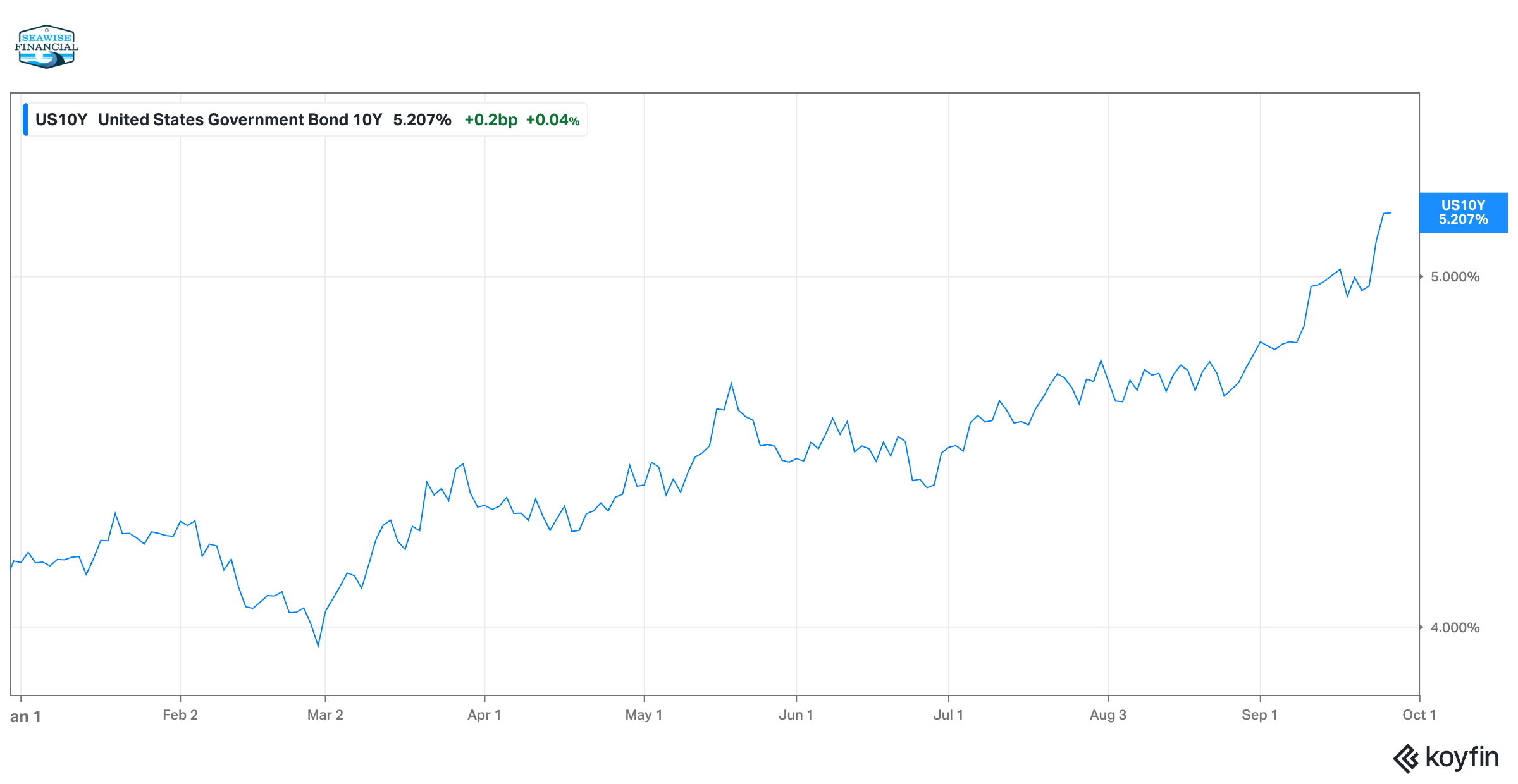
Over the past month, interest rates have moved sharply higher. The 10-year Treasury yield hit its highest level since 2007, and mortgage rates have crossed 7%. On September 16th, the Fed raised its benchmark rate and signaled that one more hike could come before year-end.
 |
Some of this is tied to short-term events, especially oil prices and the conflict around the Strait of Hormuz, and could ease if those pressures fade. But we think the bigger story is longer term. The near-zero rates of 2009 to 2021 weren’t normal; They were the exception. Two forces are likely to keep rates closer to historical norms from here:
- Government deficits. The federal government continues to borrow heavily, and all of those new Treasury bonds need buyers. More supply generally means investors demand higher yields.
- Sticky inflation. Inflation has come down a long way from its 2022 peak, but it has repeatedly been slower to reach the Fed’s 2% target than expected. As long as that’s true, the Fed has little room to cut aggressively.
We don’t expect a return to the rates of the last 15 years anytime soon.
The Downside of Higher Rates
The problem isn’t that rates are high. It’s that a lot of borrowing and investing over the last decade was built on the assumption that they would stay low. As rates settle back toward historical norms, some of those assumptions are being tested.
Rate-sensitive stocks. Some parts of the stock market feel higher rates more directly than others. Real estate, utilities, homebuilders, and smaller companies that rely on borrowed money tend to struggle when financing gets more expensive. Their businesses depend on cheap capital, and their stock prices can look a lot less appealing when bonds are paying 5%.
Private real estate and private equity. Many private deals over the last decade were underwritten assuming borrowing costs around 3%. Those numbers look very different at 6% or 7%. As that debt comes due and has to be refinanced at today’s rates, some of those investments may not deliver what investors were promised. Private investments are also valued less often than public ones, so the impact can take longer to show up on statements. Slower-moving prices don’t mean smaller losses.
Anyone refinancing. The same math applies at home. Mortgage rates have crossed 7%, and anyone with an adjustable loan, a HELOC, or a business loan coming due will likely pay meaningfully more. If you locked in a low fixed-rate mortgage in 2020 or 2021, that’s one of the most valuable assets you own, and it’s worth thinking twice before giving it up.
Stock prices overall. Over time, higher rates can weigh on the broader market too. When bonds pay 5%, investors can afford to be pickier about what they pay for stocks, and companies face higher borrowing costs. Thankfully, earnings have been strong enough to carry the market this year. But that can change if interest rates keep rising as quickly as they have in September.
The Silver Lining: Bond Income Is Back
For those of you in or approaching retirement, higher rates are good news over the long run. For much of the last 15 years, high-quality bonds paid very little, often less than inflation. That’s no longer the case. With the 10-year Treasury yielding around 5.20% and inflation running in the 3.5% range, bonds are finally paying investors more than the rising cost of living.
This matters more than it might seem. Historically, the yield on a bond portfolio when you buy it has been one of the best predictors of the return it earns over the following years. When starting yields were near 2%, bond returns were stuck near 2%. Starting yields are now meaningfully higher, which sets the stage for better bond returns and more reliable income going forward.
Why Diversification Matters More Now
One lesson from 2022 is that when inflation is the problem, stocks and bonds can fall at the same time. That’s why we don’t rely on bonds alone to balance out stock risk. Depending on your plan, your portfolio may also include international stocks, which give you exposure to different economies, currencies, and valuations. It may include gold, which has historically held its value during periods of inflation and government borrowing. And it may include alternative strategies which aim to profit from sustained trends in interest rates, currencies, and commodities in either direction, and which held up well in 2022 when stocks and bonds both struggled.
None of these will win every year. The point is that they tend to win at different times, which makes the ride smoother and your plan more durable.
Looking ahead, the fourth quarter will bring more headlines about oil, the Fed, and the economy, and we can’t predict how markets will react in the short run. What we can say is that this year has looked more normal than it’s felt, rates are offering retirees real income again, and a diversified portfolio has more tools to work with than it did a few years ago.
Here’s to a strong finish to the year.
As always, if you want to talk through how any of this applies to your specific situation, please schedule a call with us.